
.avif)








.avif)

.avif)





.avif)













.svg)



.svg)


.svg)


.svg)












The Short Answer Before the Long One
Quartz is the most practical choice for most Dubai kitchens because it resists stains without any sealing, granite handles heat and daily wear well at a lower price than marble, and marble gives you the most striking look but needs the most careful upkeep in this climate. None of the three is objectively "best." It genuinely depends on how you cook, how much maintenance you're willing to do, and what look you want walking into your kitchen every morning.
We get asked about this constantly during kitchen renovation consultations, usually right after a client has spent an hour scrolling countertop photos online and ended up more confused than when they started. Fair enough. The material advice out there tends to repeat the same three bullet points without explaining what actually changes once that slab is sitting in a Dubai kitchen through a full summer.
Key Takeaways
- Quartz is engineered stone made from crushed quartz and resin, so it doesn't need sealing and resists stains better than granite or marble.
- Granite is a natural stone that handles heat from hot pans reasonably well and needs sealing roughly once a year.
- Marble is the most porous of the three and etches when acidic things like lemon juice or vinegar touch it, which is why it's usually chosen for looks over low maintenance.
- Dubai's tap water and hard water spotting near sinks affect all three materials, though it shows up faster on darker, more porous stone.
- Quartz slabs are cut and shaped using tools that generate silica dust, so installation should always go through a professional team, not a DIY job.
- Sunlight through large kitchen windows, common in a lot of Dubai villas and apartments, can gradually dull quartz resin over years in a way it doesn't affect granite or marble.
Quartz, Granite, and Marble at a Glance
Here's the core difference before we go deeper into each one. Quartz is manufactured, which makes it consistent and low-maintenance. Granite and marble are both cut from natural stone, which makes every slab genuinely one of a kind, but with that comes more variability in how each one performs.
Granite sits in the middle on hardness and heat tolerance. Marble is the softest and most reactive to acid. Quartz doesn't need sealing at all, while granite and marble both do, on different schedules. If you want the short version: quartz for low fuss, granite for a natural look with fewer worries, marble if the aesthetic matters more to you than the maintenance.
Quartz Countertops in Detail
What It's Actually Made Of
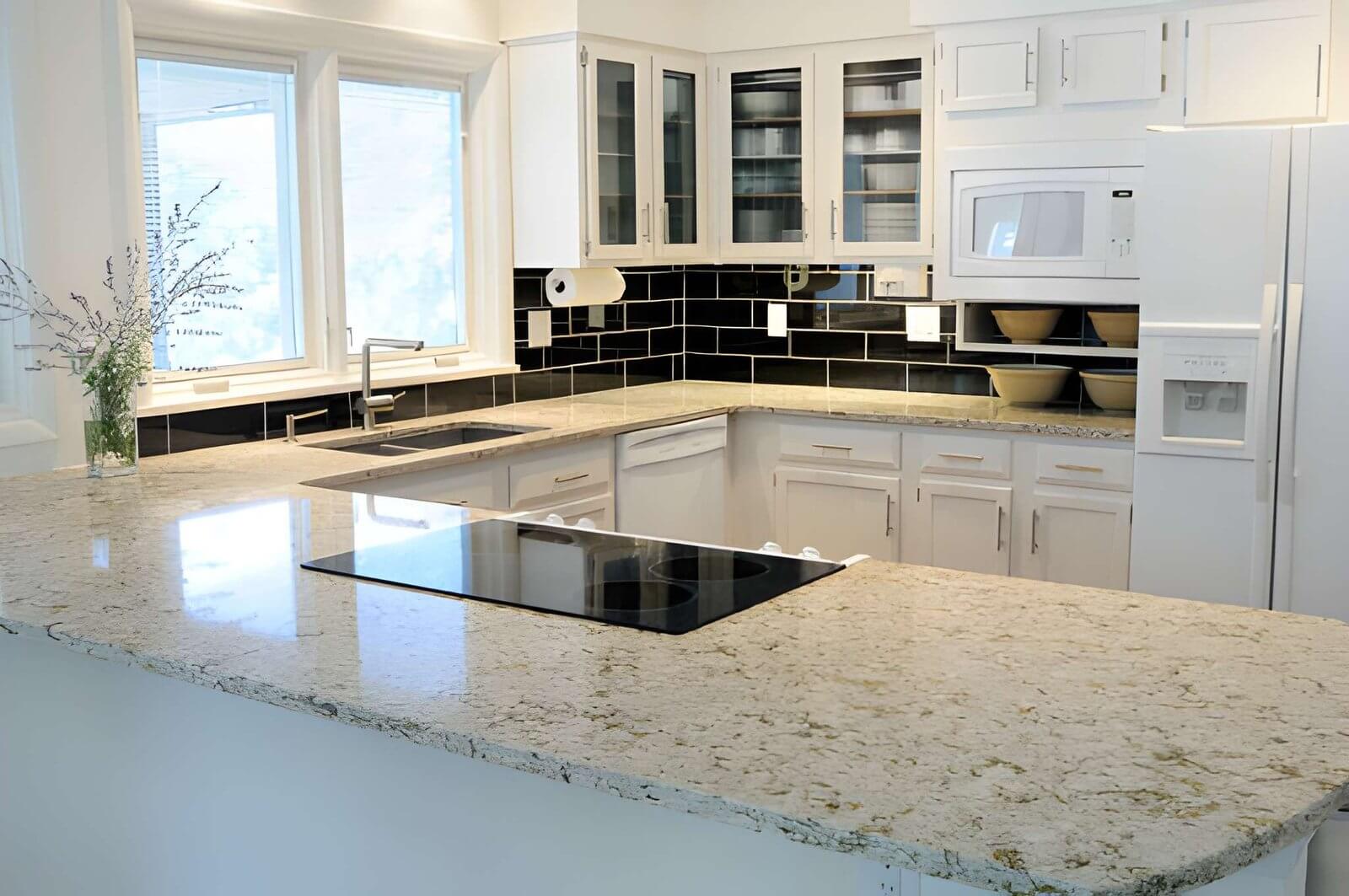
Quartz worktops aren't quarried in one piece the way granite and marble are. They're engineered, crushed quartz mineral bound together with resin and pigment, which is exactly why the colour and pattern come out so consistent from one end of the slab to the other. If you want a kitchen island that matches perfectly with no odd veining running off in a strange direction, this is usually the material that delivers it.
Why It Works Well Here
No sealing, ever. That alone makes quartz appealing to a lot of our clients who just want one less thing to think about. It resists staining from coffee, oil, and turmeric (a genuinely relevant one in most Dubai kitchens) far better than either natural stone option.
Where It Falls Short
Quartz doesn't love direct, sustained heat. Put a hot pan straight from the hob onto it without a trivet and you risk scorching or cracking the resin. And here's something that doesn't come up in most buying guides: quartz isn't great with prolonged direct sunlight either. Kitchens with large glass windows or those semi-open layouts you see in a lot of newer Dubai villas can, over several years, see the resin in quartz dull or yellow slightly where the sun hits hardest. Granite and marble don't have this issue since they're solid mineral, not resin-bound.
A Detail Worth Knowing Before You Order
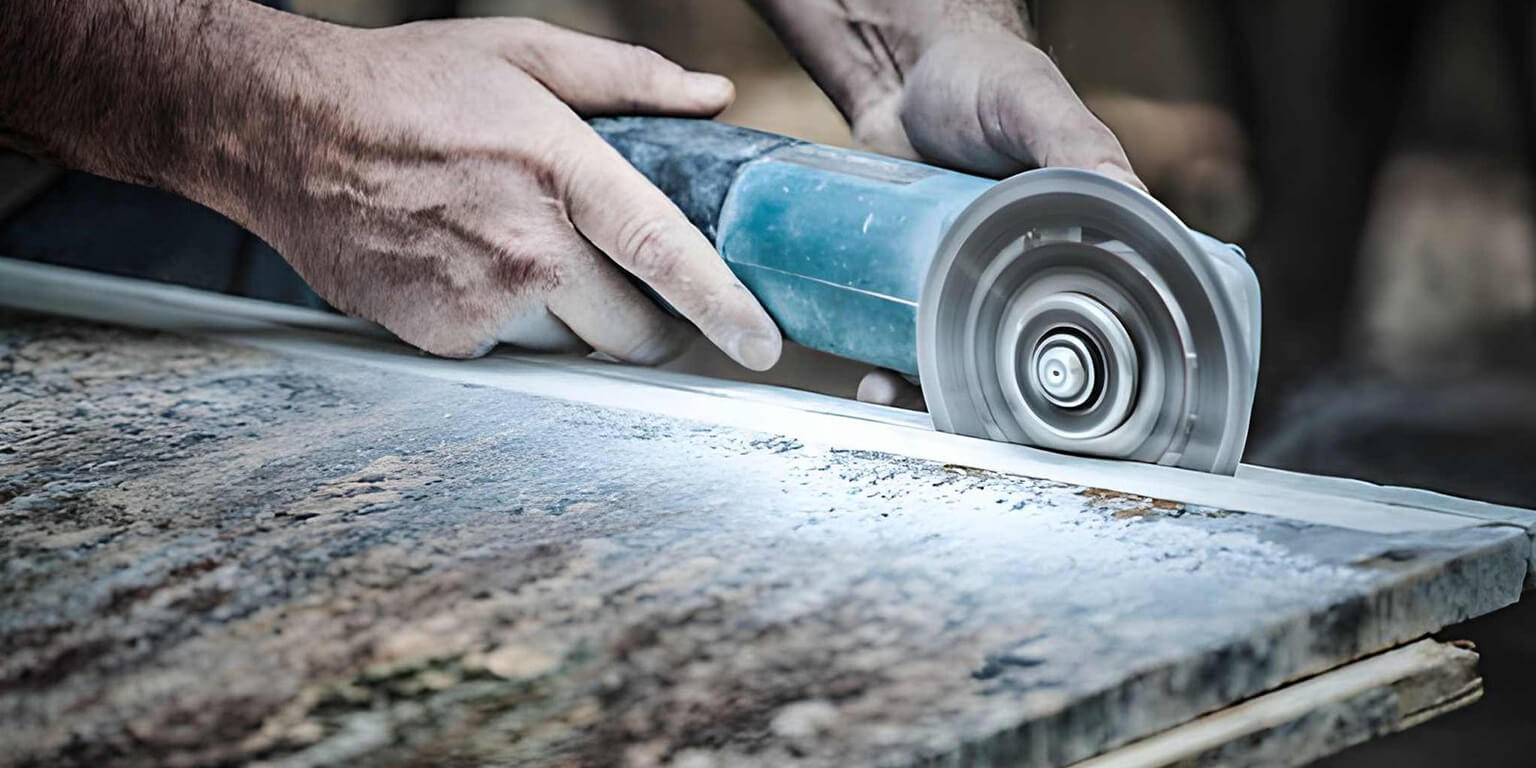
One thing almost nobody mentions when writing about quartz online: cutting and shaping it during fabrication produces fine silica dust, and engineered stone products can contain a very high percentage of crystalline silica. The UK's Health and Safety Executive has specifically flagged this, noting that engineered stone can contain up to 95 percent crystalline silica and that dry-cutting methods produce far higher dust exposure than wet-cutting. This isn't something you need to worry about as a homeowner sitting in your finished kitchen. It's a reason the cutting and installation should always be handled by a team that fabricates and fits the slab properly, rather than something attempted as a shortcut.
Granite Countertops in Detail
Heat and Scratch Resistance
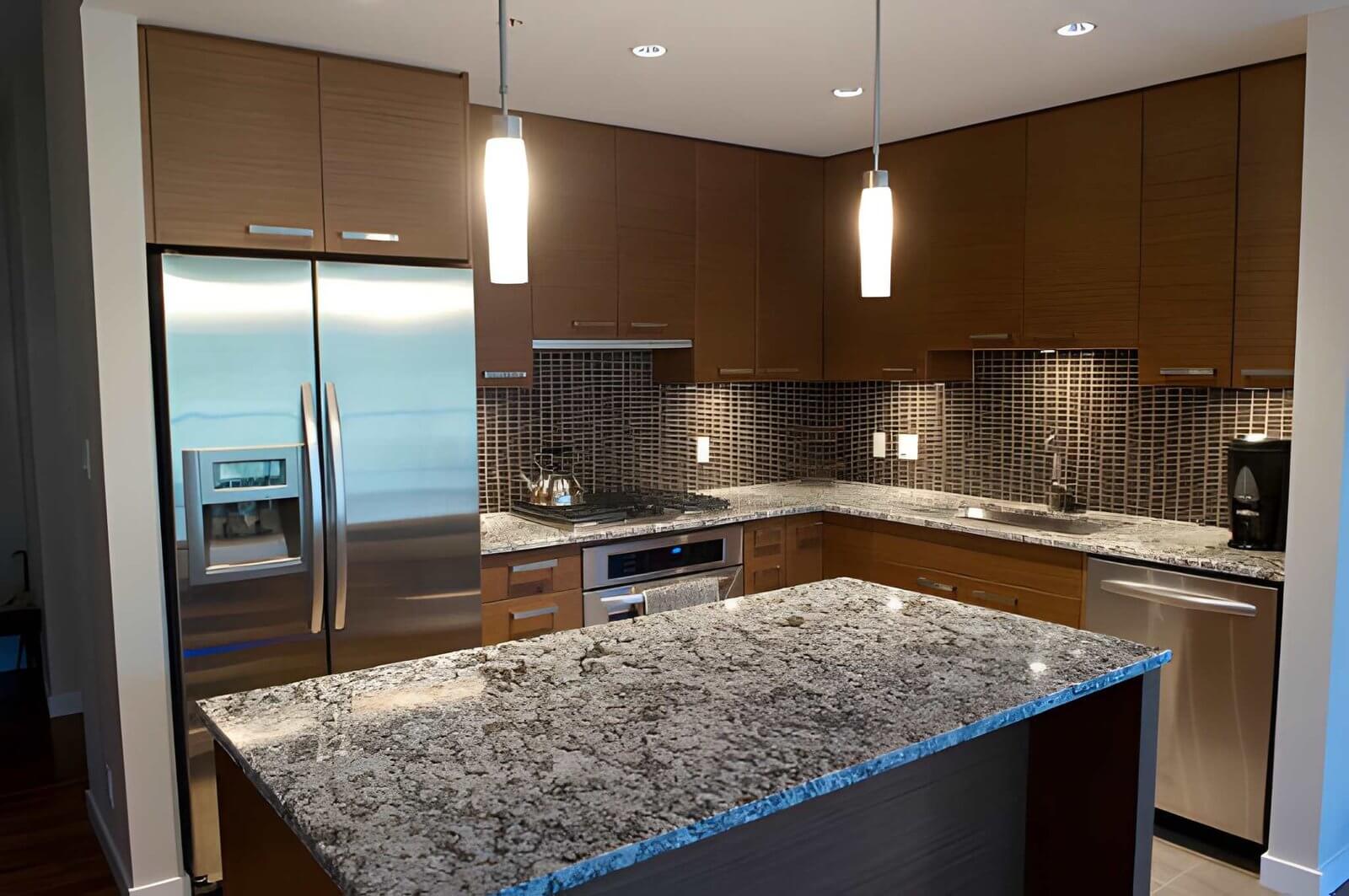
Granite is where a lot of serious home cooks land, and for good reason. It's naturally hard, handles a hot pan far better than quartz, and shrugs off knife scratches better than most people expect (though we'd still recommend a cutting board, always).
Maintenance That's Genuinely Manageable
Granite needs sealing, typically once a year, sometimes less depending on the specific stone and how it's used. It's not a big job. Most homeowners can do it themselves with a product from any hardware store, though we handle it as part of scheduled upkeep for clients who'd rather not think about it.
Where It Falls Short
Cost sits above quartz in most cases, and every slab looks different, which is either a feature or a frustration depending on whether you want total consistency or don't mind natural variation. Unsealed granite can also absorb oil stains over time, particularly around the hob.
Marble Countertops in Detail
The Look Everyone's After
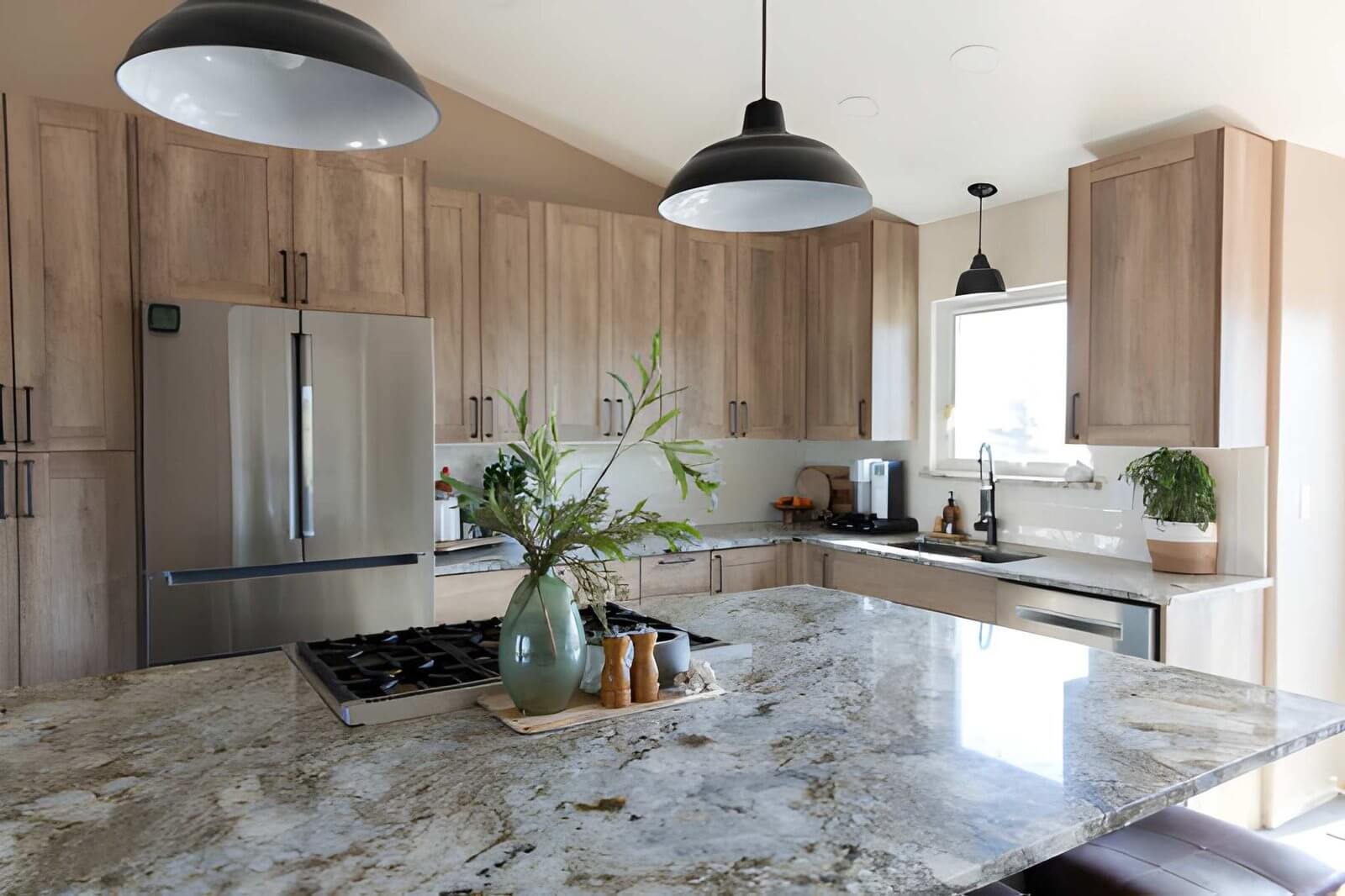
Marble is why some people renovate their kitchen in the first place. That soft veining, the way light plays across it, there's a reason it shows up in every high-end kitchen photo you've ever saved. It's a natural stone, and no two slabs are identical.
The Maintenance Reality
Marble is calcium carbonate at its core, which means it's sensitive to anything acidic. Lemon juice, vinegar, even some tomato-based sauces left sitting too long can etch a dull mark into the surface permanently. According to the Natural Stone Institute's guidance on stone care, sealing products act more like a repellent than a true seal, and mild, non-acidic cleaners are the only safe option for calcareous stone like marble. Translation: no vinegar spray, no lemon-based cleaners, ever.
Where It Falls Short
It's the softest of the three, so it scratches and etches more easily, and it needs resealing more often than granite. If you're after a low-maintenance kitchen, marble genuinely isn't it. If you want the look and you're willing to put in the care, it's hard to beat.
Dubai-Specific Factors That Actually Matter
Generic countertop advice written for a different climate misses a few things that come up constantly here.
Hard water spotting near the sink is one of them. We covered this in more depth in our piece on hard water in Dubai, but the short version is that repeated evaporation concentrates minerals on surfaces, and that includes the countertop right around your tap. It shows up faster on darker or more porous stone.
Heat is another. Dubai kitchens run hot appliances for a long cooking season, and marble and granite handle ambient heat from ovens and hobs better than quartz over the long run.
And then there's sun exposure, which we mentioned above but it bears repeating: floor-to-ceiling windows and open-plan kitchens facing west are common in newer developments, and that afternoon sun is intense enough here to matter for resin-based materials in a way it wouldn't in a cooler climate.
How to Choose Based on How You Actually Use Your Kitchen
Ask yourself honestly: are you cooking daily with turmeric, oil, and acidic sauces, or is this a kitchen that mostly gets used for coffee and the occasional dinner party?
Heavy daily cooking, family kitchen, don't want to think about sealing: quartz. Serious home cook who wants natural stone and doesn't mind an annual sealing session: granite. Kitchen that's as much about how it looks as how it's used, and you're willing to be careful with lemons and vinegar: marble.
There isn't a wrong answer here, just a mismatch if you pick based on photos alone without thinking about how your household actually lives.
How We Handle Countertop Selection During a Renovation
Material choice isn't something we leave until the last minute. During the design and 3D visualisation stage of a renovation, we walk clients through actual slab samples against their cabinetry and lighting choices, because a quartz sample under showroom lighting looks nothing like it will under your kitchen's actual downlights.
Sink and hob cutouts also need to be measured and cut to match your chosen appliances exactly, which is coordinated alongside the plumbing and electrical work rather than treated as a separate job. That's the sort of detail that gets missed when countertop installation and renovation are handled by two different companies who never talk to each other. If you're planning a full kitchen renovation in Dubai, we manage the material selection, the cutting, and the trade coordination as one connected project rather than passing you between suppliers.
Planning a Kitchen Renovation? Let's Talk Materials
Choosing between quartz, granite, and marble is a lot easier once you've actually seen and touched the samples against your own cabinetry and lighting, not just a photo online. We can walk you through the options as part of a full kitchen renovation, from material selection right through to the final sink and hob installation.
Explore our kitchen renovation services in Dubai to book a consultation and see samples for yourself.
Disclaimer: This article is intended for general informational purposes based on publicly available guidance and industry sources. Material performance can vary by supplier, slab quality, and installation standard, so always confirm specifics with your fabricator before ordering. It is not a substitute for professional advice from a licensed contractor or stone supplier.


.webp)






.svg)